|
|
|
|
|
|||
|
|||
|
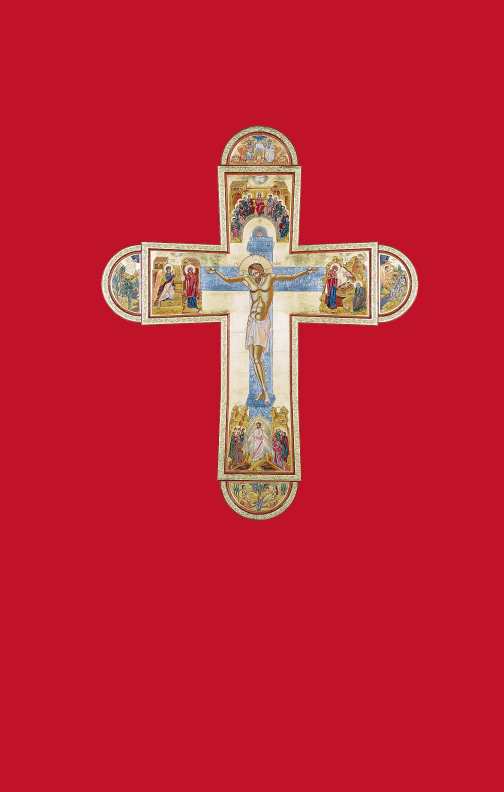
ECUMENICAL COMMEMORATION OF WITNESSES TO THE FAITH CELEBRATED BY HIS HOLINESS TOGETHER WITH REPRESENTATIVES AT THE COLOSSEUM PRESENTATION I. THE IMPORTANCE AND SIGNIFICANCE OF THE ECUMENICAL COMMEMORATION The Ecumenical Commemoration of Witnesses to the Faith in the Twentieth Century, to be held on Sunday 7 May of the Holy Year 2000, originated in the primatial concern of His Holiness Pope John Paul II: - a concern for all the Churches and Ecclesial Communities, including those not yet in full communion, that they may acknowledge an ecumenism lived in giving one's life in sacrifice for Christ; The Commemoration is linked to the Holy Father's statement in the Apostolic Letter Tertio Millennio Adveniente: "In our own century the martyrs have returned, many of them nameless, 'unknown soldiers', as it were, of God's great cause. As far as possible, their witness should not be lost to the Church... This gesture cannot fail to have an ecumenical character and expression. Perhaps the most convincing form of ecumenism is the ecumenism of the saints and of the martyrs. The communio sanctorum speaks louder than the things that divide us" (TMA, No. 37). The Commemoration of Witnesses to the Faith in the Twentieth Century, occurring during this Holy Year which celebrates the two thousandth anniversary of the birth of our Savior, is meant to give glory to Christ, the faithful witness of the Father (cf. Rev 1:5). It was he who bestowed the power of the Holy Spirit upon so many of our Christian brothers and sisters, enabling them to confess his name and offer him the courageous witness of their faith, their hope and their love. The Commemoration also clearly seeks to be ecumenical in character. For "the persecutions of believers - priests, religious and laity - has caused a great sowing of martyrdom in different parts of the world. The witness to Christ borne even to the shedding of blood has become a common inheritance of Catholics, Orthodox, Anglicans and Protestants..." (ibid.). This ecumenism in the giving of one's life and in the shedding of one's blood is surely something new, a sign of the times which ought to draw all Christians closer to full visible communion. Unity lived in the endurance of persecution is a call to make further progress towards the unity of a faith professed in life and proclaimed in the mission to all nations. The Bull Incarnationis Mysterium lists a number of historical and social situations which led to a flowering, even in the midst of injustice and cruelty, of a "noble profession" (cf. 1 Tim 6:13) of faith on the part of Christian men and women from various Churches and Ecclesial Communities: "This century now drawing to a close has known very many martyrs, especially because of Nazism, Communism and racial or tribal conflicts. People from every sector of society have suffered for their faith, paying with their blood for their fidelity to Christ and the Church, or courageously facing interminable years of imprisonment and privations of every kind..." (IM, No. 13). The ecumenical aspect of the Commemoration of Witnesses to the Faith in the Twentieth Century is particularly brought out by the explicit mention not only of members of the Catholic Church but also of Christians from other Churches and Ecclesial Communities. In addition, distinguished representatives of other Churches and Ecclesial Communities, accompanied by faithful from different nations, will join the Bishop of Rome in celebrating the Commemoration. All will take active part in the celebration through ritual gestures, by proclaiming the readings and the texts of the testimonies, and in prayer. At this celebration the witnesses to the faith are commemorated not individually but rather collectively. They are grouped in various categories in such a way as to include the different continents, the various Churches and Ecclesial Communities, and the victims of all the regimes and ideologies of the twentieth century. Without naming the witnesses to the faith in the prayers, some of them are explicitly mentioned either as the authors of the testimonies to be read or as subjects of the accounts narrated therein. The various testimonies have a geographic character, since they include all continents, an historical character, since they evoke the regimes and the ideologies of the twentieth century which persecuted the witnesses to the faith, and an ecumenical character, since they include members of various Churches and Ecclesial Communities. II. THE UNFOLDING OF THE RITE The Ecumenical Commemoration takes place at Evening Prayer of the Third Week of Easter; it thus falls in the Easter Season and in particular on the Lord's Day, when the Church celebrates the victory of the Risen Christ over sin and death. The Risen Lord opens the hearts of the faithful to the hope of everlasting life and gives meaning to suffering, tribulations and death itself. Evening Prayer is a time when the faithful of different Churches and Ecclesial Communities celebrate Christ as the "Joyful Light of the Holy Glory of the Heavenly and Immortal Father" (Hymn Phos hilaron). The site chosen for the Commemoration is the Colosseum which, together with other places nearby, like the Circus Maximus, calls to mind the witness of faith given by the early martyrs of the Church of Rome. The Commemoration takes place outside the amphitheatre, near the Arch of Titus. It is made up of various ritual moments and is preceded by a preparation which respects the ecumenical and international character of the assembly. Inside the Colosseum, prior to the start of the Commemoration, the Holy Father will offer a fraternal greeting to the Representatives of the other Churches and Ecclesial Communities. 1) Initial Rites The initial rites include: a "statio" inside the Colosseum, the procession to the area of the celebration outside the amphitheatre, the Holy Father's introduction and the opening prayer. Inside the Colosseum. After the opening hymn, the Holy Father greets the assembly. An invocation of praise to the Holy Trinity follows, recited by the Representatives of the Churches and Ecclesial Communities; it consists of a proclamation in different languages of texts drawn from the Book of Revelation (Rev 4:11; 5:12; 5:9-10; 5:13). The assembly responds to each acclamation by singing: Amen . Alleluia. At the end of the invocations, the procession with the Cross and the Gospel Book sets out from the inside of the Colosseum, while the choir sings the Hymn to Christ, the Lord of the Millennia. A large icon of the Crucified Christ dominates the platform where the celebration will take place. When the procession arrives at the platform, the Gospel Book is enthroned and incensed. The Holy Father then begins the celebration with an introduction and the opening prayer. 2) The Readings The Liturgy of the Word is made up of the following readings: First Reading: 1 Pet 1:3-9, 13-21: The faith of the baptized tried by fire Song between the Readings: The wedding feast of the Lamb: Rev 19:1-7 Second Reading: Heb 12:1-6, 18-19a, 22-24: Surrounded by this great cloud of witnesses Gospel Acclamation: Alleluia Jn 12:24-25: Unless a grain of wheat falls into the earth and dies, it remains alone; but if it dies, it bears much fruit... Gospel: Mt 5:1-12: Blessed are those who are persecuted for righteousness' sake, for theirs is the kingdom of heaven The Gospel is proclaimed in both a Western and an Eastern language. After the Gospel, the choir acclaims Christ, the "Joyful Light", by singing the ancient Christian hymn "Phos hilaron". The Holy Father then gives the homily. 3) The Profession of Faith, Testimonies and Prayers The sign of peace follows the Holy Father's homily and precedes the profession of faith. The two deacons, in Greek and in Italian, invite all present to exchange a sign of fraternal fellowship. Meanwhile the choir and the assembly sing the hymn Ubi caritas. The Holy Father then introduces the profession of faith. The Apostles' Creed is recited, using three different languages, by three representatives of the other Churches and Ecclesial Communities. The assembly joins in each time by singing: Credimus, Domine, Amen. After the profession of faith comes the specific commemoration of the witnesses to the faith in the twentieth century. The witnesses are grouped in eight categories honoring the memory of Christians from all Continents and from the different Churches and Ecclesial Communities: Catholics, Orthodox, Anglicans and Protestants. At the end of the commemoration of each group of witnesses, a lamp is lit at the foot of the Crucifix which dominates the assembly and incense is burnt as a sign of the prayer of the just. The testimonies and the prayers are meant to be a collective remembrance of specific groups of witnesses, evoking the different continents and the various situations in which Christians of various denominations have borne heroic witness to their faith. The following groups of witnesses to the faith in the twentieth century will be commemorated: 1. Christians who bore witness to their faith under Soviet totalitarianism Two significant testimonies will be read: the first is from the Russian Orthodox Patriarch Tichon, while the second is from an anonymous witness from the gulag in the Solovki Islands. Both relate the ecumenism of suffering uniting Catholics and Orthodox. 2. Witnesses to the faith who were victims of Communism in other nations of Europe Two texts are read, one by the Romanian Greek Catholic Bishop Joan Suciu, the other by Father Anton Luli, an Albanian Jesuit imprisoned for seventeen years and then condemned to another eleven years of forced labor. 3. Confessors of the faith who were victims of Nazism and Fascism Tribute is paid to the courageous witness of the German Lutheran Pastor Paul Schneider in the Buchenwald concentration camp. The second testimony is that of Bishop Ignacy Jez, Bishop Emeritus of Koszalin-Kolobrzeg, one of the thousands of Polish priests interned in concentration camps. Ordained a priest on 20 June 1937, he was sent after four years of priestly ministry to Dachau as No. 37196. 4. Followers of Christ who gave their lives for the proclamation of the Gospel in Asia and Oceania Testimonies are read from Margherita Chou, the niece of the late Cardinal Ignatius Kung Pin-mei, Bishop of Shanghai, and from a group of Anglicans killed in a concentration camp in Japan. Witnesses to the faith in Spain and Mexico are commemorated: the former in the text of a moving document by the then Minister of the Republic Manuel Irujo and the latter in a sermon of the Bishop of Huejutla, José de Jesús Manríquez y Zárate, delivered in exile in Laredo, Texas, on the Feast of Christ the King, 27 October 1927. 6. Witnesses of evangelization in Africa and Madagascar The first testimony is that of Jolique Rusimbamigera, a seminarian who escaped the massacre at the minor seminary of Buta, Burundi, on 30 April 1997, in which forty-four Hutu and Tutsi seminarians were killed. The second testimony is that of a young Canadian Baptist missionary, W.G.R. Jotcham, who worked in the leprosarium of Katsina, in a Muslim area in Nigeria, and died a victim of charity in 1938. 7. Christians who gave their lives for love of Christ and of their brothers and sisters in America The testimonies remembered are those of the Capuchin missionary Bishop Alejandro Labaka, who worked tirelessly on behalf of the Amazonian people and died in Ecuador on 21 July 1987, and of Jesús Emilio Jaramillo Monsalve, Bishop of Arauca, Colombia, a Xavierian Missionary of Yarumal, kidnapped and killed at the age of 73 by a group of guerillas during a pastoral visit to rural parishes of his Diocese on 2 October 1989. 8. Witnesses to the faith in different parts of the world The first testimony is that of a monk of Tibirin, Algeria, Trappist Father Dom Christian de Chergé, killed in 1996. The second text is by the Armenian Apostolic Patriarch Karekin I, who died in 1999; it evokes the sufferings and martyrdom of the Armenian people. The series of commemorations ends with a collective remembrance of all those victims whose faith was known to God alone. Between the various testimonies religious hymns will be sung by choirs from different ecclesial traditions: a Lutheran choir, an Eastern Christian choir, an African choir, a Filipino choir and an Armenian choir. The singing of the Our Father in Latin, preceded by a brief introduction and followed by the doxology Quia tuum est regnum, concludes the various testimonies and prayers. The entire Commemoration ends with an exhortation by the Holy Father to keep alive the memory of the witnesses to the faith in the twentieth century in all the Churches and to bear courageous witness to the Gospel of Christ in every nation and in every sector of society. The Holy Father then imparts the Apostolic Blessing. The deacon dismisses the assembly and the choir sings the recessional hymn. III. CHARACTERISTIC RITUAL ELEMENTS AND THEIR SIGNIFICANCE The Ecumenical Commemoration unfolds through a series of characteristic ritual elements. 1) The initial meeting of the Holy Father with the Representatives of the different Churches and Ecclesial Communities inside the Colosseum expresses the coming together of all Christians on the Lord's Day and in grateful memory of all our brothers and sisters who have professed their faith in Christ. The celebration opens with the glorification of the Most Holy Trinity through the proclamation of texts drawn from the Book of Revelation. The procession with the Cross and the Gospel Book is a sign of the ecumenical journey undertaken by the Churches in the footsteps of the witnesses to the faith, guided by the glorious Cross and by the one Gospel of Jesus Christ, who is the same yesterday, and today, and for ever. 2) The Biblical readings have been chosen to reflect the real meaning of the celebration. The first reading, taken from the First Letter of Saint Peter (1:3-9, 13-21), expresses the joy of those who have believed in Christ despite the testing of their faith in the crucible of suffering. The reading is followed by a text of the Book of Revelation: the eschatological canticle of the Heavenly Jerusalem for the wedding feast of the Lamb who was slain (19:1-7). The second reading, taken from the Letter to the Hebrews, evokes the great cloud of witnesses who urge Christians on as they run the race of faith with their gazes fixed on Christ, the pioneer and perfecter of that faith (12:1-6; 18-19a; 22-24). The Alleluia verse accompanying the Gospel procession repeats Jesus' words about the grain of wheat which must fall to the ground and die if it is to bear much fruit (Jn 12:24-25). The Gospel takes up the magnificent words of the Beatitudes as recorded by Saint Matthew (5:1-12). The faces of the many witnesses to the faith are a clear expression of the power of Jesus' words. They reflect, as in so many living icons, the different aspects of the Beatitudes of the Good News of the Kingdom. The Gospel is proclaimed in both Western and Eastern languages, as a way of emphasizing the universality of the Church and of the witnesses to the faith in East and West. The assembly acclaims the Risen Christ in the words of the ancient evening hymn: Phos hilaron. 3) The moment of the Commemoration itself is richly evocative: After the Holy Father's homily and before the joint profession of faith, the sign of peace is exchanged between all present, in memory of the witnesses to the faith, our brothers and sisters in Christ who sealed by their own blood the faith of the Creed which they professed. The sign of peace is introduced and accompanied by the hymn of our brotherhood in Christ: Ubi caritas. The common profession of the Apostles' Creed is introduced by the Pope and proposed in its triple, trinitarian, division by three Representatives of the Churches and Ecclesial Communities in three different languages, while the assembly responds by singing: Credimus, Domine, Amen. The series of testimonies and prayers seeks in some way to include the immense multitude of witnesses whom no one can count. These are Catholic, Orthodox, Anglican and Protestant Christians belonging to different Churches and Ecclesial Communities. Every continent and all vocations are represented. The reading of the testimonies and the prayers of commemoration are done in various languages with the participation of faithful from different nations and from different Churches and Ecclesial Communities, as a sign of universality and of ecumenical sharing. As mentioned above, this characteristic moment includes the commemoration of specific events through the reading of select testimonies. The Church of our time seeks to imitate an element of the ancient tradition of the early Church; the reading within the liturgical assembly of the acta et passa, the deeds and sufferings of Christians who had borne witness to their faith. These accounts were often in the form of letters from the different communities. A number of choirs from various Churches and Ecclesial Communities, then sing hymns from their respective religious traditions. The series of commemorations concludes with a prayer to God, the Father of all, for all the victims of violence, and with the singing of the Lord's Prayer. The celebration concludes with a powerful exhortation by the Holy Father to keep alive the memory of these courageous witnesses to the faith. IV. AN ECUMENICAL WITNESS BEFORE THE CHURCH AND BEFORE THE WORLD The Ecumenical Commemoration of Witnesses to the Faith in the Twentieth Century is meant to be an act of praise to God who is exalted in his saints, a dutiful remembrance of our brothers and sisters who maintained fidelity to their faith in Christ the Lord of history, and an example for all Christians who are called in our day to bear faithful witness to the Gospel before the world. All the Particular Churches have been asked to join the Holy Father by holding an ecumenical commemoration inspired by the texts and the prayers of the celebration to be held at the Colosseum. In this way, in the spirit of Pope John Paul II's words in the Bull Incarnationis Mysterium, the memory of the witnesses to the faith will resound throughout the world: "Yes, this is the host of those who 'have washed their robes and made them white in the blood of the Lamb'. For this reason the Church in every corner of the earth must remain anchored in the testimony of the martyrs and jealously guard their memory. May the People of God, confirmed in faith by the example of these true champions of every, age, language and nation, cross with full confidence the threshold of the Third Millennium" (No. 13).
|
 |